Jewelry, 1995 Ford Mustang & Fine Art Multi Platform
Lot 246:
Description
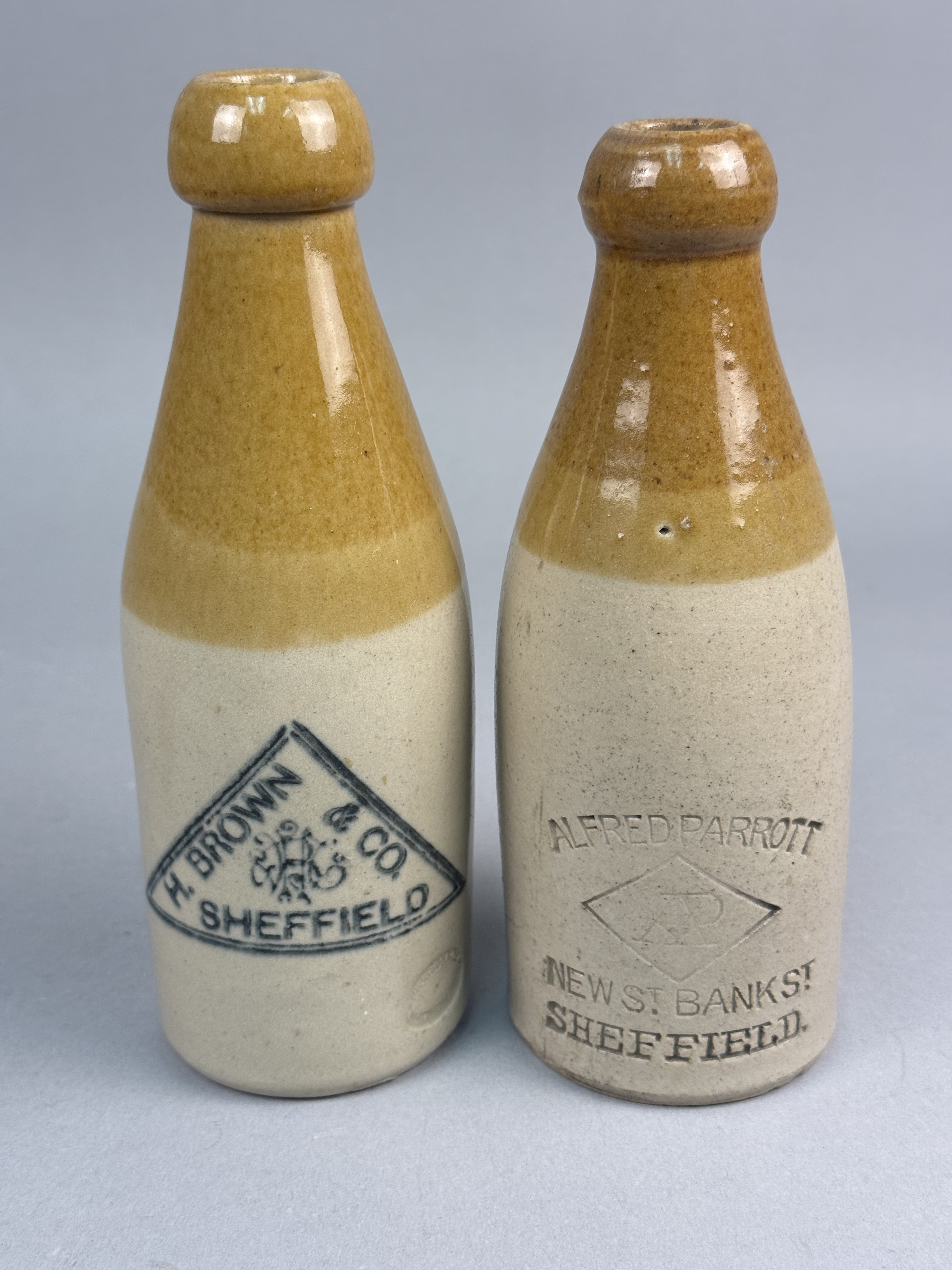
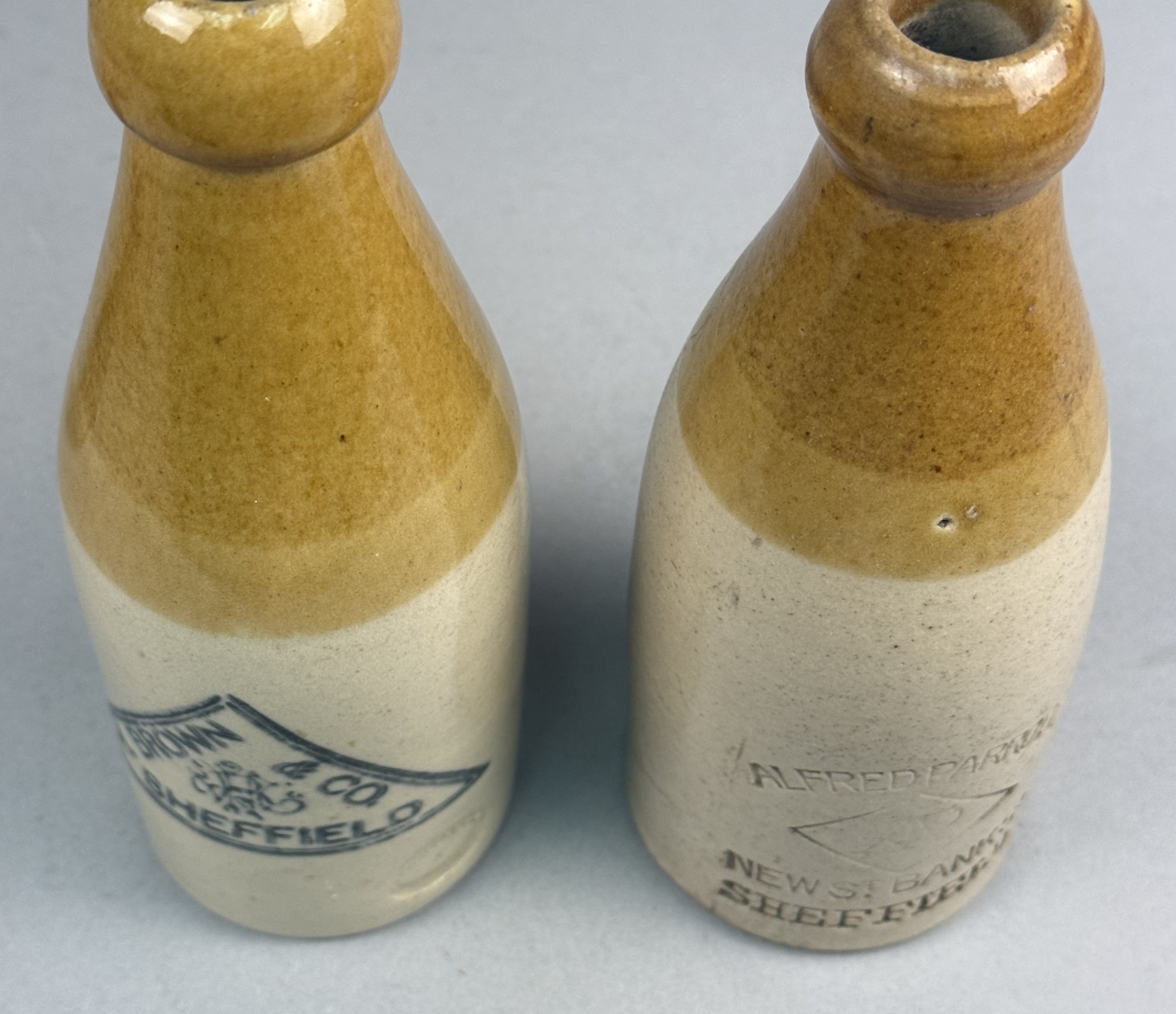
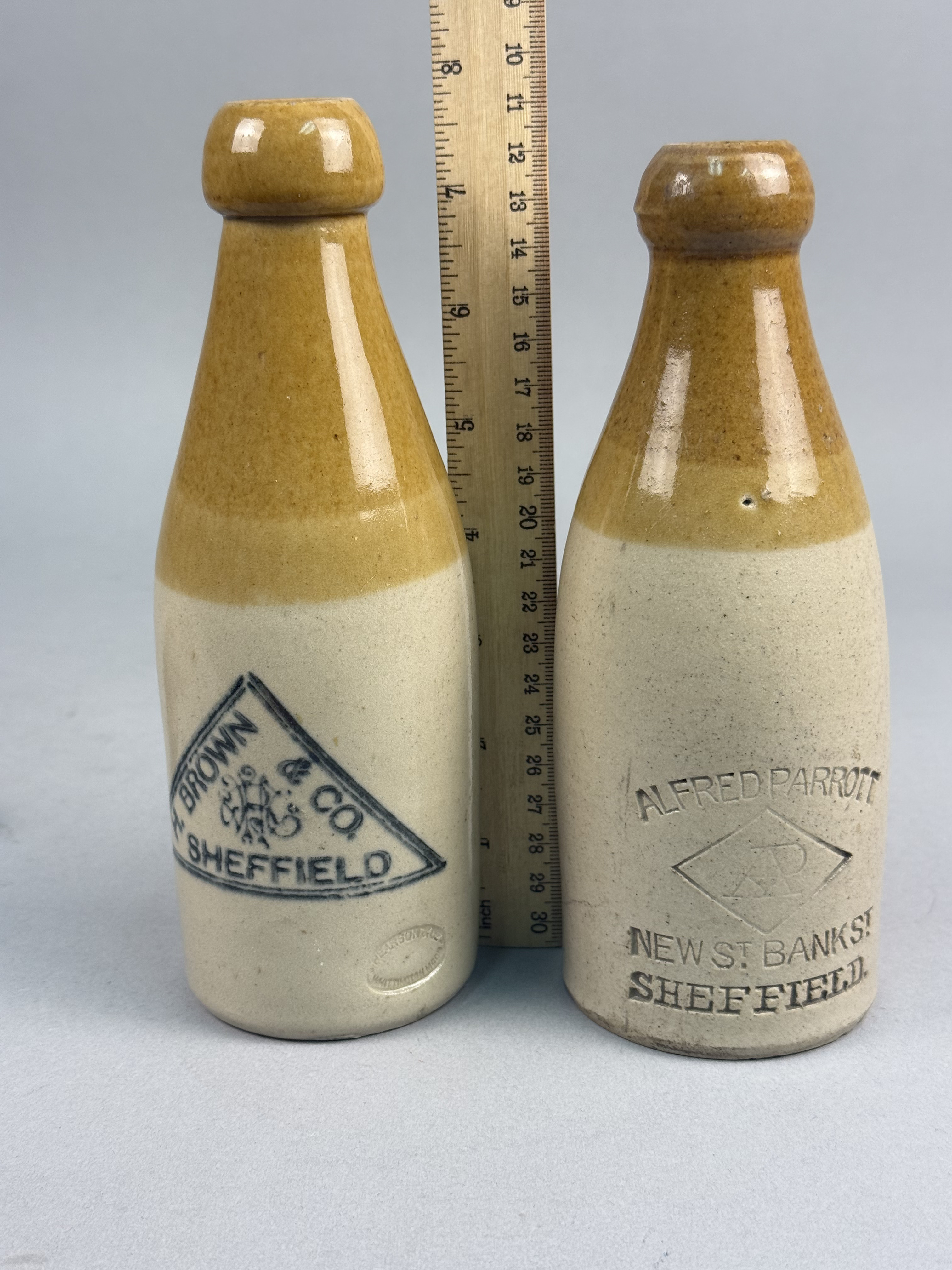
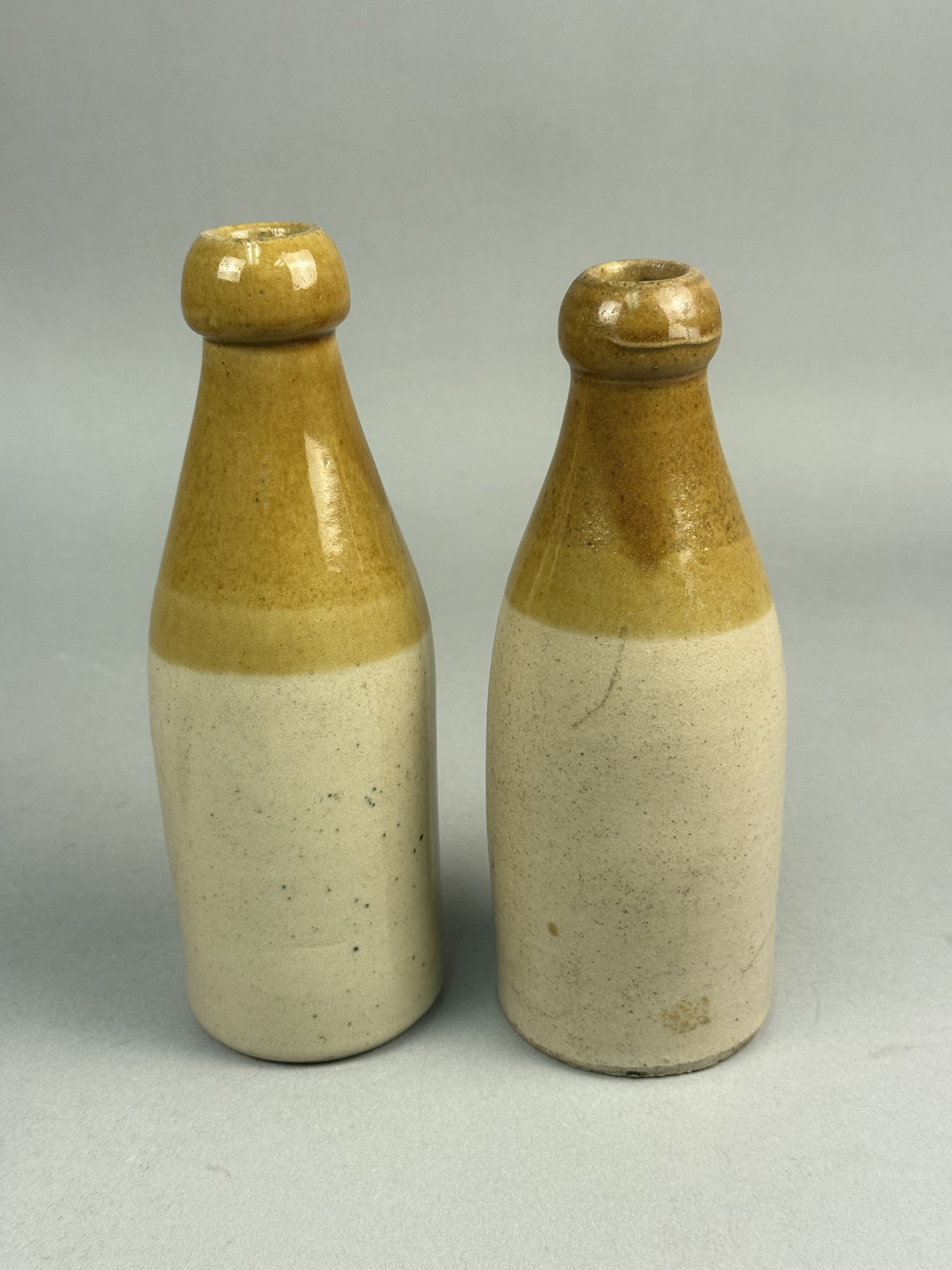
A pair of antique salt-glazed stoneware bottles, historically utilized for ginger beer or mineral water, originating from Sheffield, England. These vessels feature a cylindrical body tapering to a neck with a bulbous blob top rim. They are finished in a traditional Victorian-era two-tone style, with a honey-brown bristol or salt glaze on the upper portion and a cream-colored lower body.
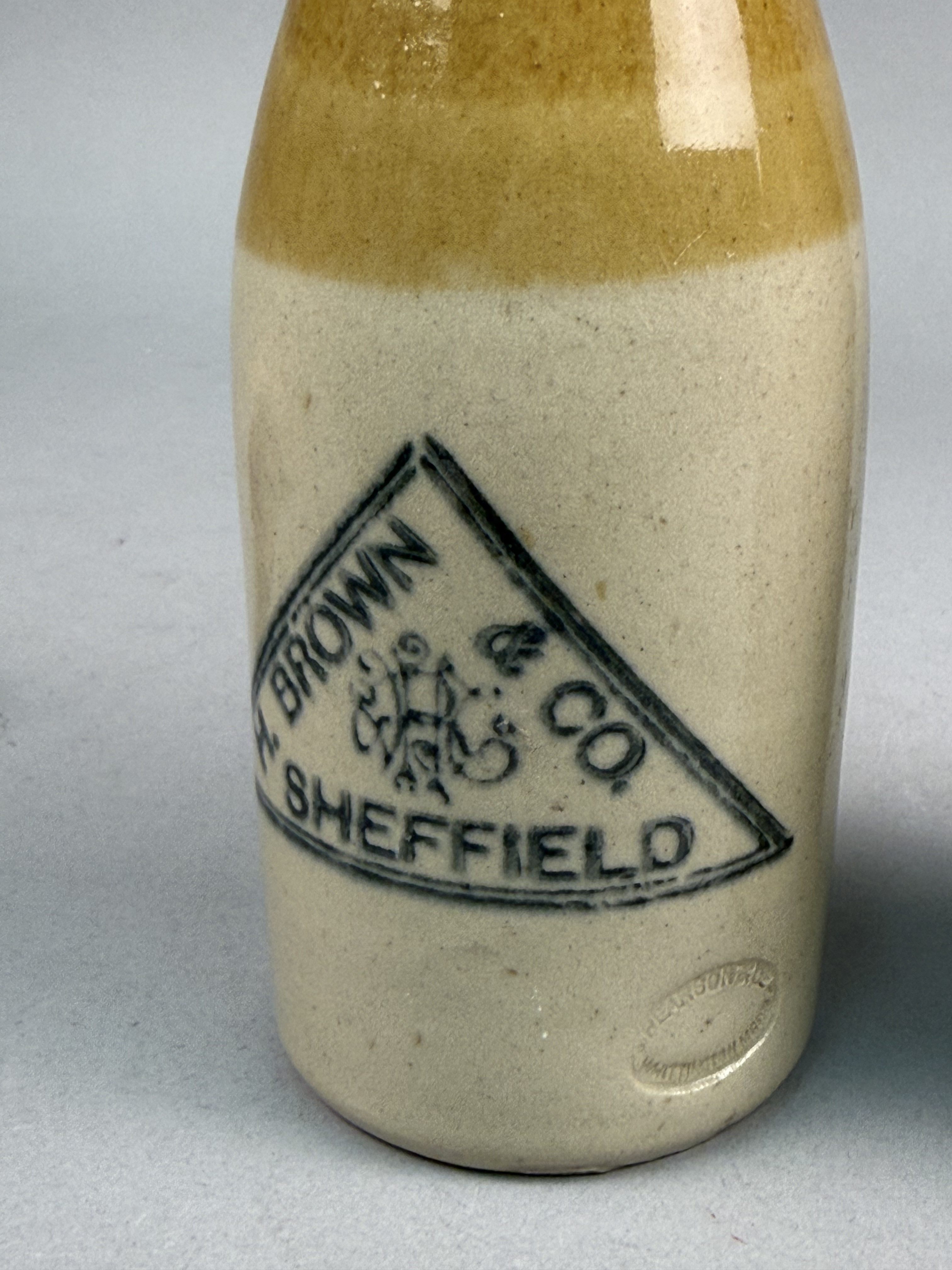
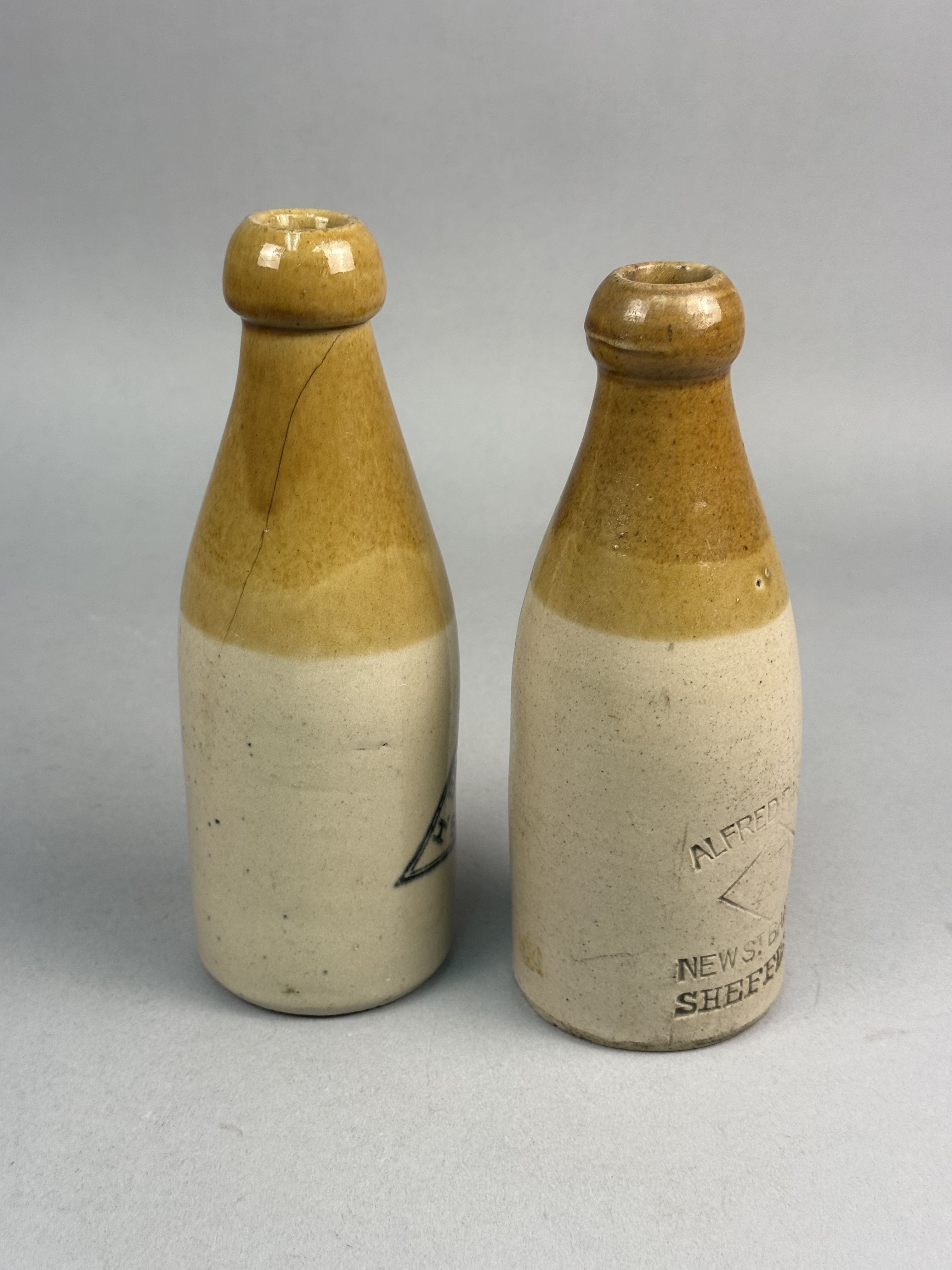
The first bottle features a dark blue transfer-printed triangular logo on the front for H. Brown & Co. Sheffield, enclosing a stylized central monogram. An impressed oval maker mark on the lower side reads Pearson & Co. Whittington Moor, identifying the manufacturer as the Whittington Moor Potteries in Chesterfield.
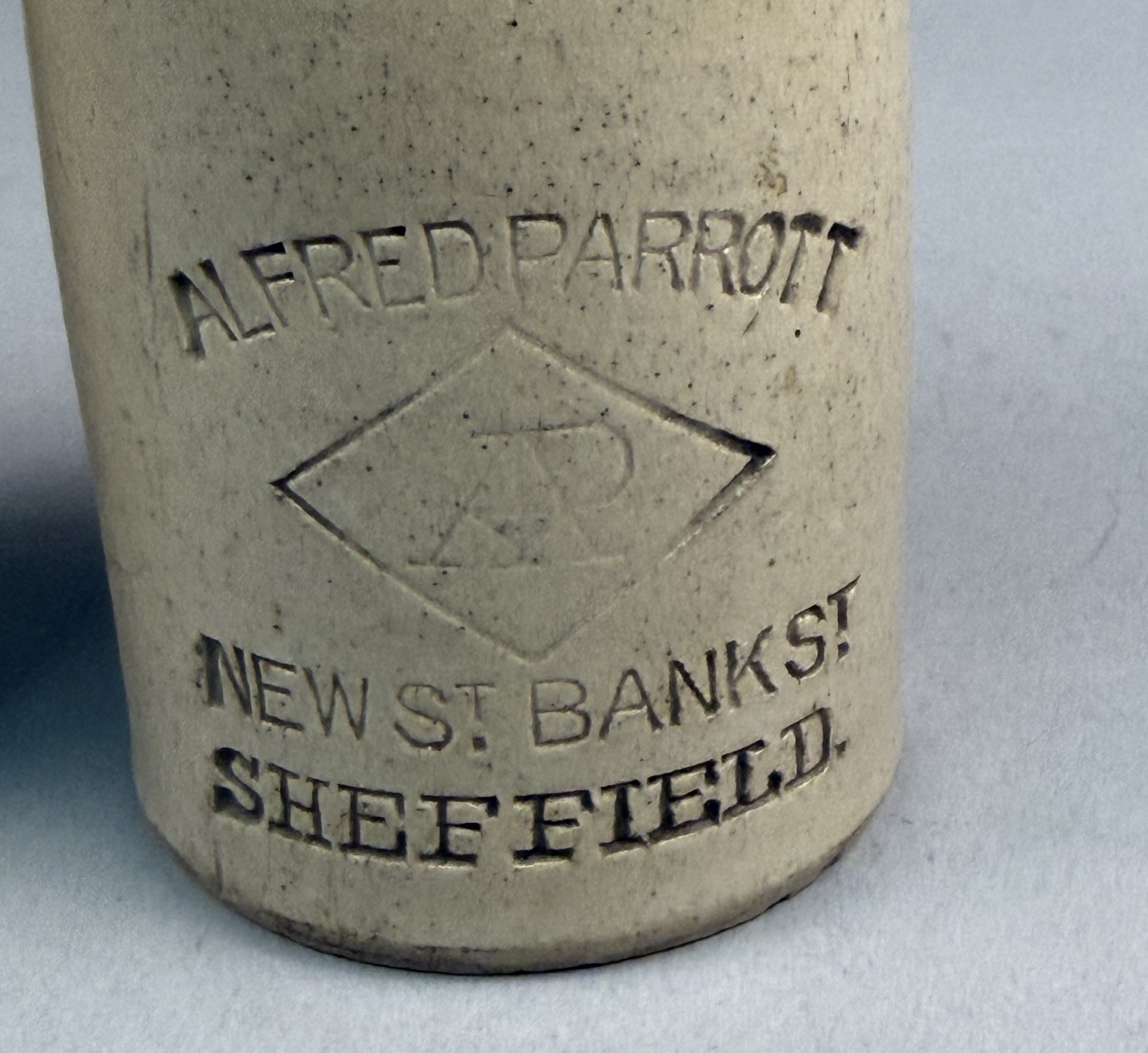
The second bottle is decorated with deeply impressed text on the front for Alfred Parrott of New St, Bank St, Sheffield. The text surrounds a diamond-shaped monogram containing the initials A and P.
Height: approximately 7.5-8 inches
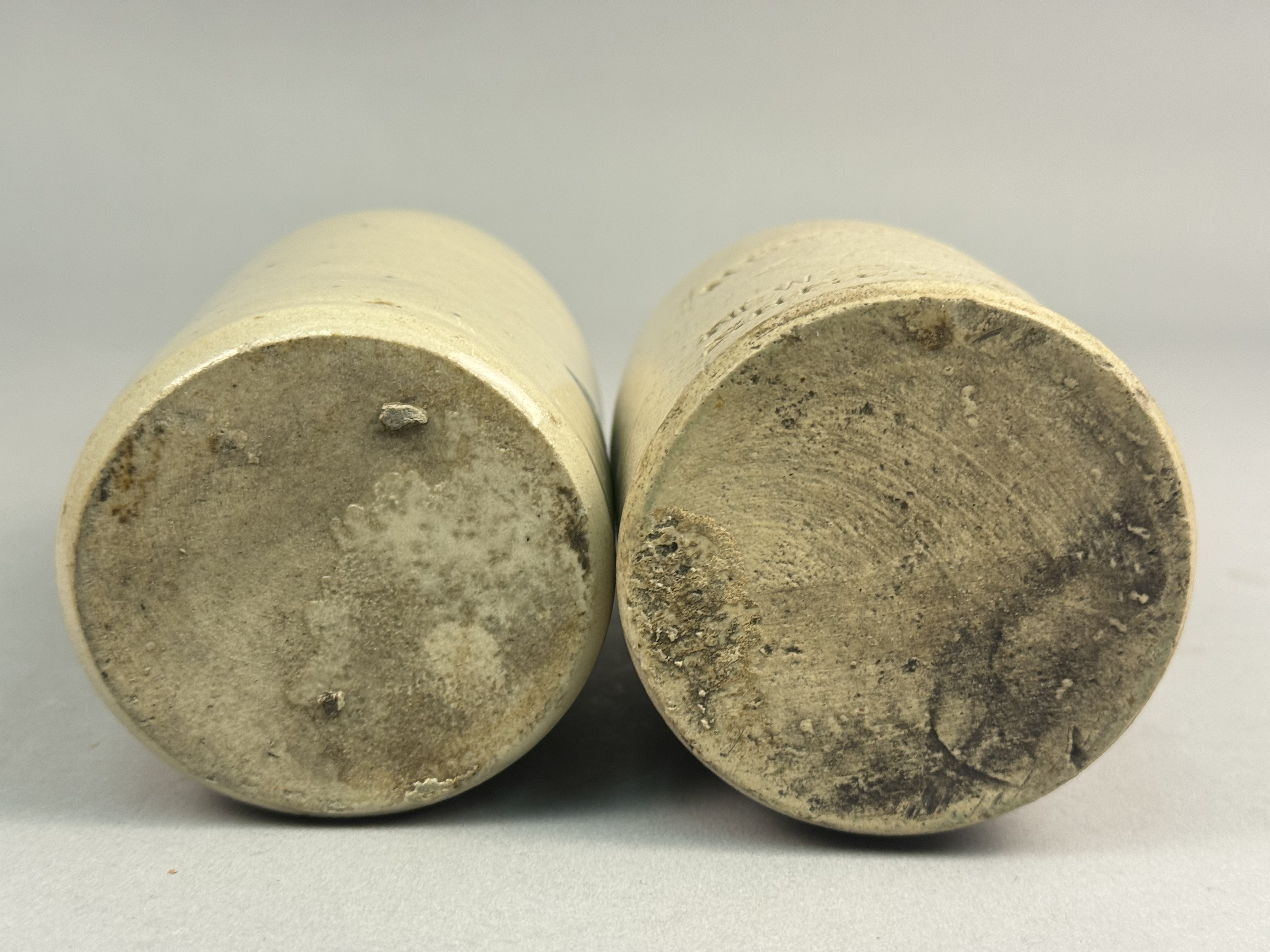
The H. Brown bottle displays a prominent vertical hairline crack running from the top of the rim down through the neck and into the upper shoulder. The Alfred Parrott bottle is in generally good condition with a small firing pit noted on the shoulder. Both bottles show signs of age-appropriate wear, including staining and discoloration on the unglazed bases, minor surface pitting, and small glaze imperfections common to ground-find stoneware of this period.
Condition report:
The H. Brown bottle displays a prominent vertical hairline crack running from the top of the rim down through the neck and into the upper shoulder. The Alfred Parrott bottle is in generally good condition with a small firing pit noted on the shoulder. Both bottles show signs of age-appropriate wear, including staining and discoloration on the unglazed bases, minor surface pitting, and small glaze imperfections common to ground-find stoneware of this period.
Share this lot: